
Siloed Contact Center Tools Undermine Patient Access Outcomes, Keona Health Analysis Finds
Chapel Hill, United States – March 25, 2026 / Keona Health /
CHAPEL HILL, N.C. – Keona Health has published an analysis of how fragmented patient access infrastructure contributes to missed appointments and unresolved calls across healthcare contact centers. The analysis includes a diagnostic framework intended to help patient access directors and call center managers evaluate whether disconnected systems are affecting operational performance.
The framework identifies common fragmentation patterns that can undermine patient access, including:
-
Patients repeating information across channels because no shared record connects interactions
-
Agents re-entering data into multiple systems during a single call
-
After-hours requests that do not carry over into the next day’s schedule
How Disconnected Systems Affect Call Center Performance
According to the analysis, organizations that have invested in individual engagement tools, such as appointment reminders, chatbots, and digital scheduling, may still experience high no-show rates and poor first-call resolution if those tools operate in silos. When web chat logs in one system, phone calls live in another, and scheduling exists in a third, patient context can be lost at every handoff.
The result, the analysis notes, is that staff ask questions patients have already answered, calls escalate unnecessarily, and patients move between systems without continuity.
“The issue is architectural,” said Stephen Dean, COO of Keona Health. “When patient context is lost at every handoff, the downstream effects show up as missed appointments, repeated calls, and staff frustration regardless of how capable each individual tool may be.”
The Case for a Unified Patient Access Record
The analysis proposes that a single shared record of every patient interaction, across phone, web, text, and scheduling, can address many of the coordination gaps that fragmented systems create. In this model, patient history, insurance status, scheduling constraints, and clinical protocols transfer across every channel transition rather than being re-entered manually.
According to Keona Health, organizations using its CareDesk platform have reported improvements in no-show rates, first-call resolution, and average handle time, though results vary by organization size and implementation scope.
Coordination and Automated Assistance
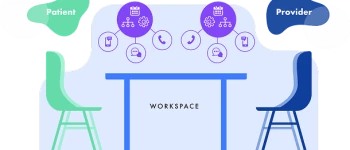
The analysis also addresses the role of automation. Automated tools that are not connected to scheduling rules and patient history can create the same handoff gaps as any other disconnected system. The analysis argues that automation is most effective when it operates within a coordinated patient access environment where context is preserved across every interaction.
“You can have the best individual tool on the market, but that does not help the patient who has to repeat their information at every step,” Dean said. “What matters is whether the system preserves context from the first interaction through the completed outcome.”
Availability
The full analysis and diagnostic framework are available on the Keona Health website at keonahealth.com/resources.
About Keona Health
Keona Health is a healthcare CRM company whose CareDesk platform coordinates patient communication across voice, chat, and self-service channels. Built for healthcare operations, not IT departments, CareDesk preserves clinical context across every patient interaction and measures completed outcomes rather than call volume. Keona Health is based in Chapel Hill, North Carolina, and serves healthcare providers across multiple specialties. Additional information is available at keonahealth.com.


Contact Information:
Keona Health
510 Meadowmont Village Circle Suite 250
Chapel Hill, NC 27517
United States
Ryan Hunt
(919) 246-8520
https://www.keonahealth.com


